Forestrike similar games & best alternatives
Should you play it?
Forestrike is a martial arts roguelite where every death brings you closer to winning the fight before it begins. Use your ‘Foresight’ ability to experiment without consequences before fighting for real until earning the ultimate reward - victory without ‘Foresight’.
What works
- Innovative foresight mechanic
- Deep strategic combat
- Varied martial arts styles
- Engaging pixel art and music
- Excellent value for price
Things to keep in mind
- Limited area variety
- Some balance issues with techniques
- Lack of quick restart option
- Repetitive environments
- Story ending feels inconclusive
What to play next
Similar games, hidden gems, and fresh directions from this game.
Top picks
Games that feel the closest overall

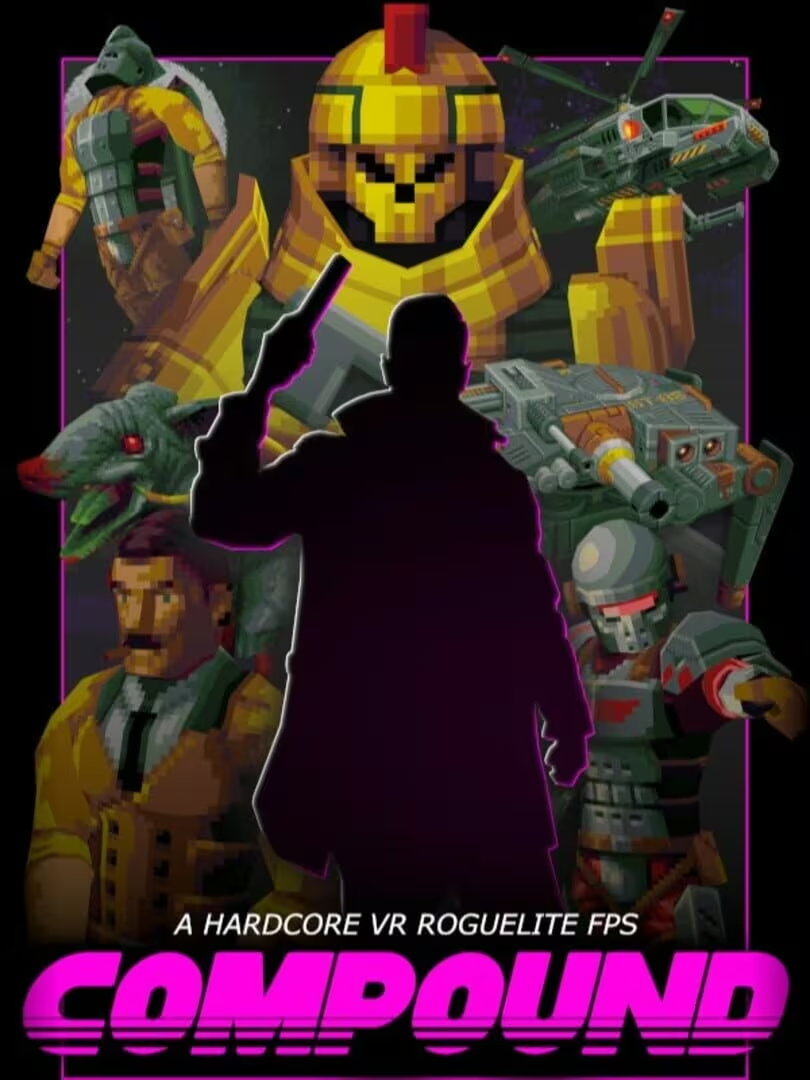
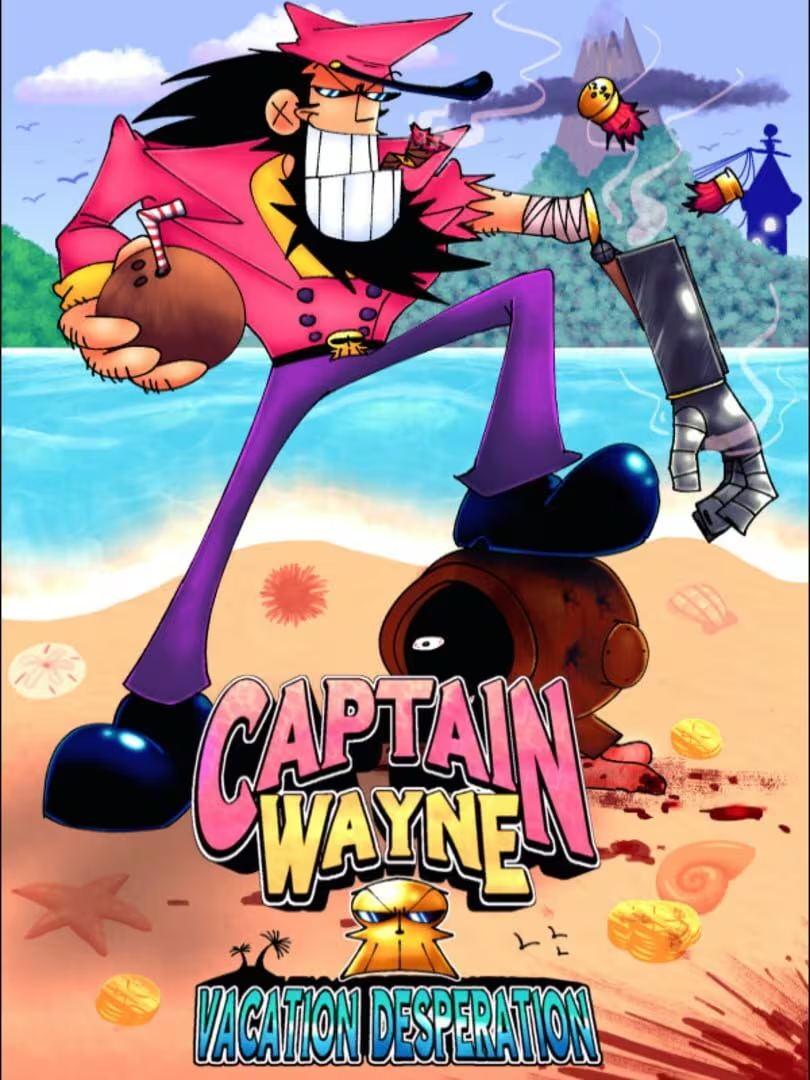
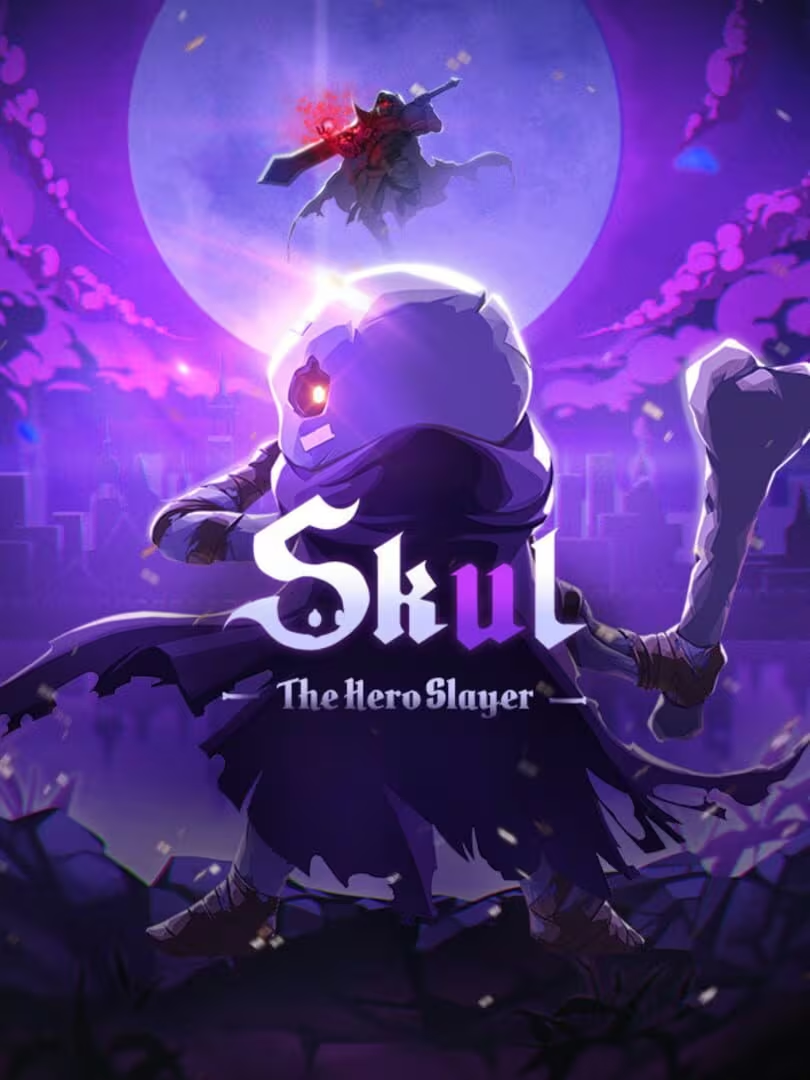
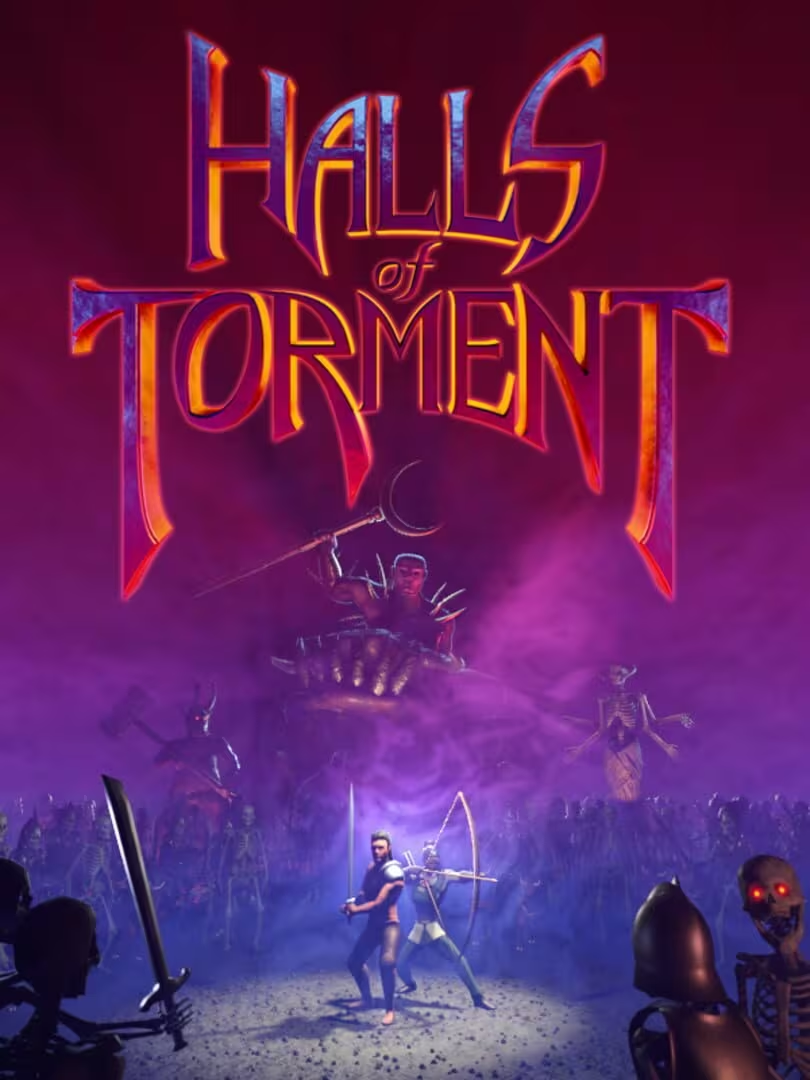
Hidden Gems
Less popular games with surprisingly high similarity

If you liked…
Recommendations by what you enjoyed most
Similarity map
Explore nearby similar games and see why they’re close.
Forestrike: Broadly representative of its motivational profile, with a few distinct shifts. Motivations that often define this kind of title include Fellowship, Violence, Survival, Cooperation. Here, the score leans higher than usual among comparable games on Violence, Health. It leans lower than usual among comparable games on Exploration.
Why this game works
A motivational profile of the game, with the closest similar game for each player motivation.
-
Autonomy
Game with the same Autonomy vibe
4"Players have freedom to choose combat style, use environment creatively, and approach fights with different tactics."
 En Garde!
"Players have freedom to choose fighting styles, techniques, and plan their own fight choreography with the foresight mechanic."
-
Competence
Game with the same Competence vibe
5"High skill ceiling with challenging combat, stamina management, and boss fights requiring mastery and timing."
 Void Sols: Prologue
"High skill ceiling with emphasis on mastering timing, execution, and strategic planning to overcome challenging fights."
-
Competition
Game with the same Competition vibe
-3"Focus is on personal mastery and self-improvement rather than direct competition or leaderboards."
 Sifu
Sifu
"Focus is on personal mastery and self-improvement rather than direct competition or leaderboards."
-
Continuation
Game with the same Continuation vibe
4"Players report long play sessions, high replayability, and addictive combat loops encouraging habitual play."
 Urtuk: The Desolation
"Players report habitual play and long sessions due to addictive combat and replayability."
-
Cooperation
Game with the same Cooperation vibe
-4"Gameplay is primarily single-player with no significant cooperative elements."
 Adventure Escape Mysteries
"Gameplay is primarily single-player focused with no significant cooperative elements."
-
Creativity
Game with the same Creativity vibe
4"Players experiment with various skill combinations and combos to create unique fighting styles."
 Fairy Bloom Freesia
"Players create unique fight choreographies and experiment with different builds and techniques."
-
Domination
Game with the same Domination vibe
-4"Interactions are balanced and respectful; no evidence of exerting control or superiority over others."
 L.A. Noire
"Interactions are balanced and respectful; no evidence of exerting control or superiority over others."
-
Escapism
Game with the same Escapism vibe
4"Players use the game for stress relief, distraction, and immersive martial arts fantasy, escaping real-life concerns."
 Martial Arts Brutality
"Players use the game as a mental challenge and immersive distraction, escaping into martial arts fantasy."
-
Expectation
Game with the same Expectation vibe
-4"Players engage voluntarily out of intrinsic interest and enjoyment rather than obligation."
 Don't Starve Together
"Players engage voluntarily out of intrinsic interest and enjoyment rather than obligation."
-
Experimenting
Game with the same Experimenting vibe
4"Strong emphasis on trying new builds, weapons, and strategies each run."
 Dungreed
"Strong emphasis on trying new strategies, builds, and approaches to fights."
-
Exploration
Game with the same Exploration vibe
-2"Maps have limited variety and repeat similar environments; exploration is less emphasized."
 Warhammer 40,000: Darktide
"Limited number of areas with repeated environments; exploration is less emphasized."
-
Expression
Game with the same Expression vibe
3"Players customize their module setups and character loadouts, expressing personal playstyle through builds."
 Rogue Voltage
"Players customize builds, techniques, and fight styles to express personal play preferences."
-
Fantasy
Game with the same Fantasy vibe
4"Strong kung-fu movie theme with mystical elements and stylized combat immerses players in an imaginative setting."
 9 Monkeys of Shaolin
"Strong martial arts and kung fu movie theme with imaginative combat and story elements."
-
Fellowship
Game with the same Fellowship vibe
-3"Primarily a solo experience with minimal social or community interaction."
 Detroit: Become Human
"Primarily a solo experience with minimal social or community interaction."
-
Growth
Game with the same Growth vibe
4"Players develop skills, learn enemy patterns, and improve performance over time."
 ARCADE GAME SERIES: GALAGA
"Players develop skills, learn enemy patterns, and improve execution over time."
-
Health
Game with the same Health vibe
-3"Typical sedentary gameplay with no physical activity elements."
 Risen
Risen
"Typical sedentary gameplay with no physical activity elements."
-
Idle
Game with the same Idle vibe
-4"Requires active physical engagement and continuous attention during fights and training."
 Creed: Rise to Glory™
"Requires focused attention and continuous engagement during fights."
-
Intimacy
Game with the same Intimacy vibe
-4"No evidence of close social relationships or emotional sharing in gameplay."
 The Surge 2
"No evidence of close social relationships or emotional sharing in gameplay."
-
Leadership
Game with the same Leadership vibe
-4"No leadership or group management roles; purely individual gameplay."
 Sonic Generations Collection
"No leadership or management roles; purely individual gameplay."
-
Progression
Game with the same Progression vibe
3"Players accumulate weapons, ammo, and upgrades, though progression resets on death due to roguelike design."
 EMPTY SHELL: PROLOGUE
"Players unlock new techniques and builds, but runs reset progress; some roguelike progression."
-
Relaxation
Game with the same Relaxation vibe
1"Some players find flow and satisfaction, but game also involves tension and challenge."
 Intravenous 2: Mercenarism
"Some players find flow and satisfaction, but tension and challenge are persistent."
-
Sensation
Game with the same Sensation vibe
3"Enjoyable pixel art, sound effects, and music provide pleasant sensory stimulation."
 Whisper of the House
"Enjoyable pixel art, sound effects, and music provide sensory stimulation."
-
Status
Game with the same Status vibe
-4"No social recognition or status systems present."
 SUPERHOT: MIND CONTROL DELETE
"No social recognition or status systems present."
-
Story
Game with the same Story vibe
3"Narrative with characters and plot provides engagement beyond isolated gameplay actions."
 DEAD OR SCHOOL
"Narrative and character interactions add context and engagement beyond isolated fights."
-
Strategy
Game with the same Strategy vibe
5"Core gameplay revolves around tactical decision-making, planning, and problem solving."
 Dark Deity
"Core gameplay revolves around planning, problem solving, and tactical decision making."
-
Thrill
Game with the same Thrill vibe
4"High stakes decisions, permadeath mechanics, and unpredictable outcomes create suspense and tension."
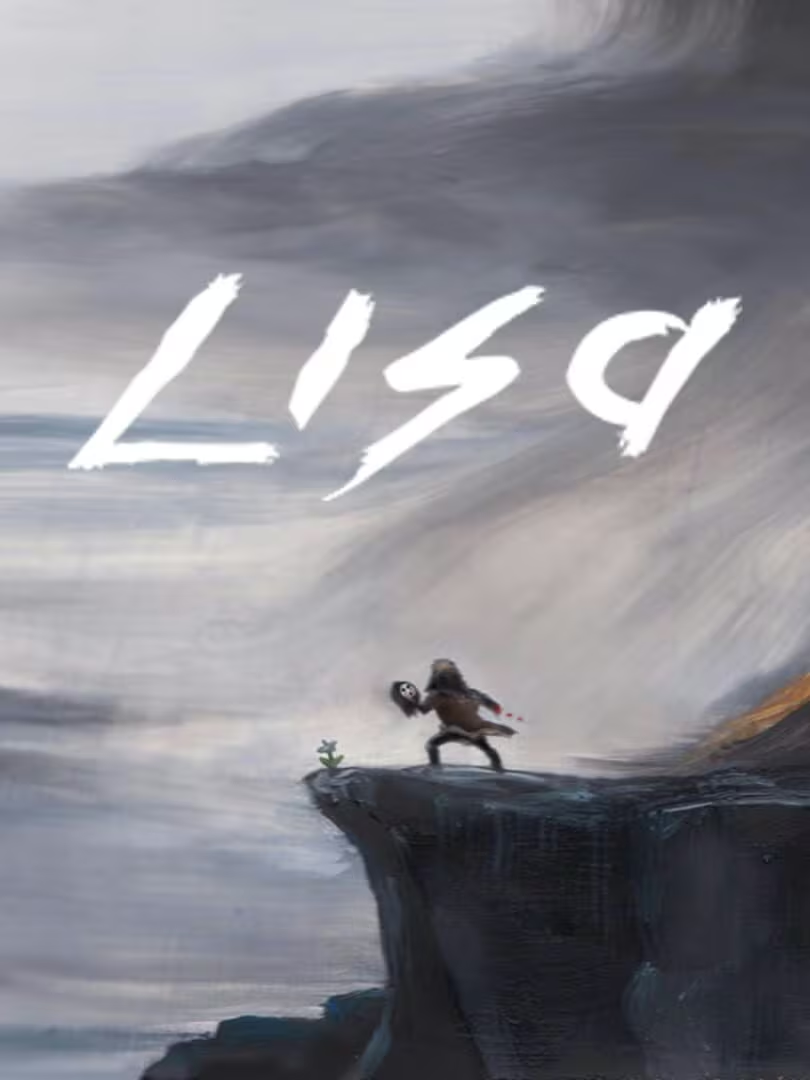 LISA: The Painful
"Tension and suspense arise from executing rehearsed plans under pressure with high stakes."
-
Value
Game with the same Value vibe
5"Players perceive strong value for price with high replayability and quality content."
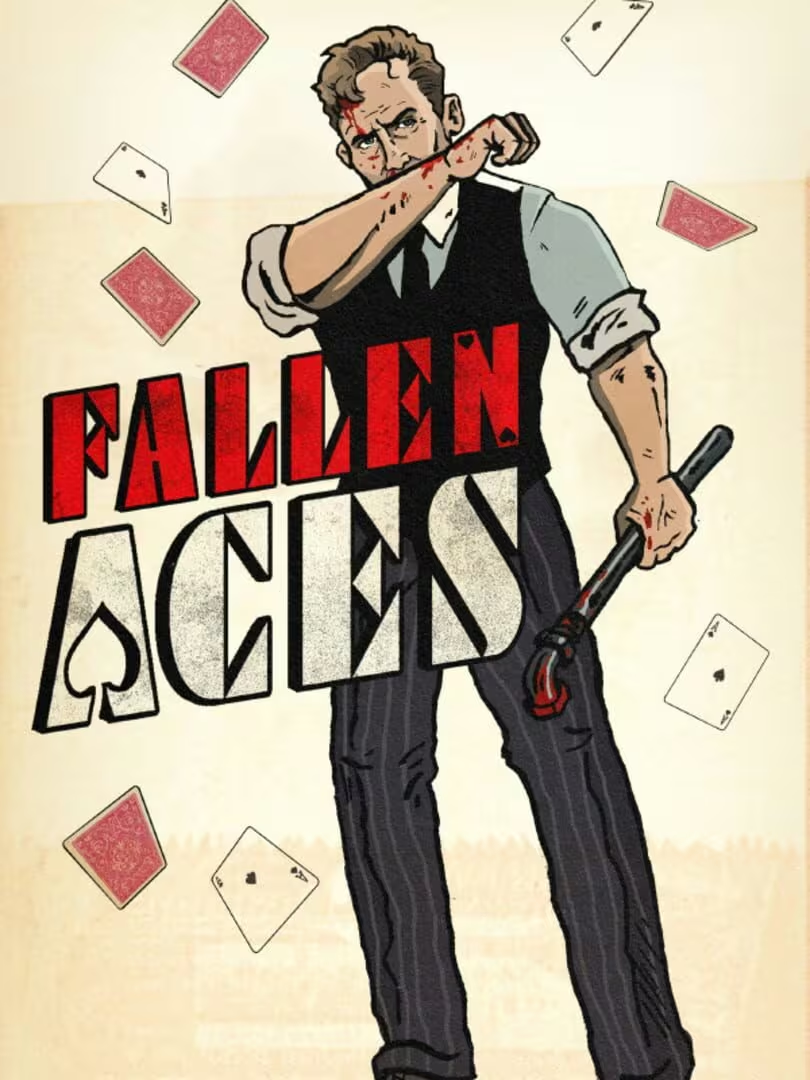 Fallen Aces
"Players perceive excellent value for price with deep gameplay and replayability."
-
Violence
Game with the same Violence vibe
4"Enjoyment of martial arts combat and fighting moves is central to the game."
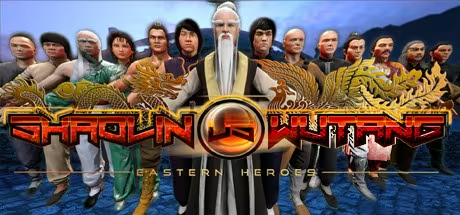 Shaolin vs Wutang
"Combat and martial arts violence are central to gameplay and player enjoyment."
-
Survival
Game with the same Survival vibe
4"Players must avoid failure, manage resources, and survive dangerous encounters."
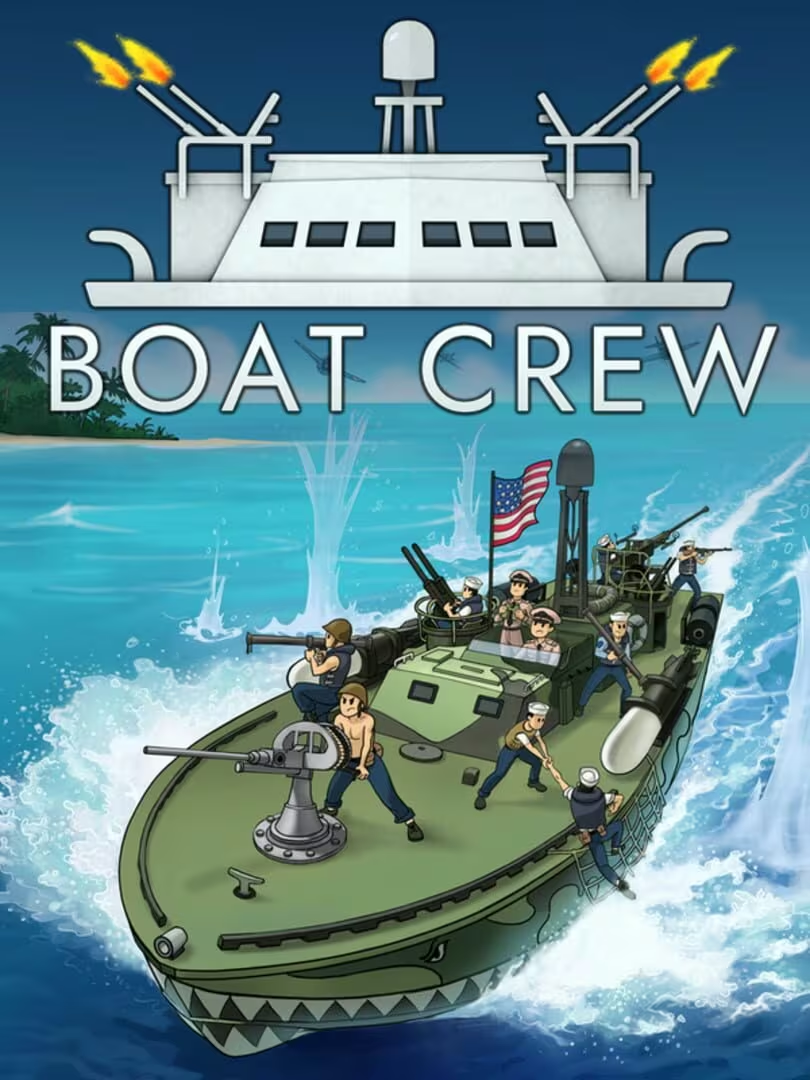 Boat Crew
"Players must avoid failure and manage limited resources to survive encounters."
Last update: 01/06/2026